Watercolor Vintage Camera Art Bundle
There is something about a painterly vintage camera that stops a scroll cold. Maybe it is the contrast between the messy warmth of watercolor and the precise, mechanical form of a classic camera. Or the way faded sepia tones and soft ink bleeds whisper stories without a single word. The Watercolor Vintage Camera Art Bundle captures that exact tension. It is a collection of hand-painted camera illustrations, distressed textures, and complementary typography elements designed for anyone who needs visual storytelling that feels collected, not produced.
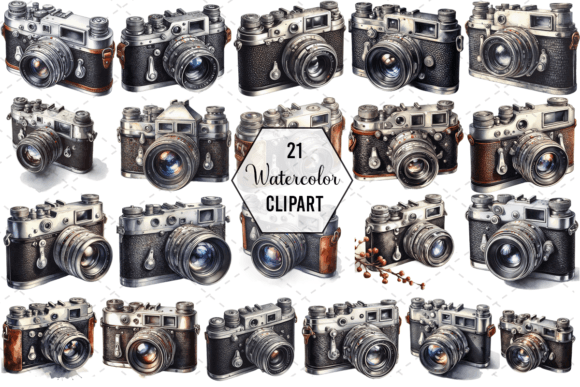
This bundle is not just a set of clip art. It is a cohesive design asset kit built around a nostalgic, travel-worn aesthetic. Think of old Leicas, twin-lens reflexes, folding bellows cameras, and box brownies rendered in soft washes of color with visible brush strokes, paper grain, and occasional splatter. The palette leans toward muted teals, ochres, dusty pinks, and charcoal blacks. The typography included—often a mix of handwritten script and distressed sans serif—echoes that same handmade feel. The personality is reflective, authentic, and slightly imperfect in the best way.
The Visual Character of Hand-Painted Camera Art
What gives the Watercolor Vintage Camera Art Bundle its distinctive voice is the texture. Every camera illustration carries the organic marks of a brush on cold-press paper. Edges are soft. Colors pool in some areas and fade in others. There is no sterile vector precision here, and that is exactly the point. This style works because it feels human. A designer can use these assets to anchor a brand in craft, heritage, or slow living without a single word of copy.
The bundle typically offers multiple camera angles and styles. You might find a front-facing TLR with symmetrical lenses, a three-quarter view of a folding camera with a leather bellows texture, and a top-down composition of a vintage Polaroid. Some variants include hand-lettered labels like “analog” or “captured” in a loose brush script. Others come as standalone cutouts against transparent backgrounds, making layering straightforward in both print and digital layouts. The visual fidelity is strong enough for a full-page poster but delicate enough for a social media graphic.
From a personality standpoint, this is not a high-speed, modern aesthetic. It is contemplative. It pairs naturally with topics like travel journalism, craft coffee, independent publishing, wedding photography, filmmaking, slow fashion, and heritage brands. If you need to communicate nostalgia, artistry, or a love for the analog process, the Watercolor Vintage Camera Art Bundle gives you immediate visual shorthand.
Where the Bundle Creates Real Impact
Practical application is where this kit proves its worth. Because the assets are painterly and rich in texture, they work across several creative contexts without feeling pasted on. Here are the most effective places to use them.
Brand Identity and Logo Design
A watercolor camera icon can become the centerpiece of a brand mark for a photography studio, a creative agency, or a travel blog. When paired with a clean sans serif font—something like a geometric sans or a subtle grotesque—the contrast between the organic art and the structured type creates visual tension that feels intentional. The bundle also includes wordmark style scripts that can serve as secondary logos or watermark stamps. For a photographer launching a personal brand, this approach offers an affordable way to look custom without starting from scratch.
Editorial and Publishing Projects
Magazines, zines, and online publications covering travel, art, or culture can use these illustrations as chapter openers, pull quote backgrounds, or full-bleed cover art. The watercolor texture adds a tactile quality to digital pages, which is rare in screen-based reading. In a printed booklet, the art reproduces beautifully on uncoated paper stocks where the ink sits on the surface and mimics the original brush feel. The bundle gives editors a consistent visual theme across multiple spreads without needing to commission new illustrations for each feature.
Packaging and Product Design
Small businesses selling physical goods benefit directly from the Watercolor Vintage Camera Art Bundle. Think of a candle company with a photography-themed line, a stationery brand producing notebooks and greeting cards, or a coffee roaster naming blends after classic camera models. The art can appear on labels, hang tags, tissue paper, and box interiors. The handwritten type elements work well for ingredient lists or short product stories. Because the assets are watercolor, they sit naturally on kraft paper, recycled board, and matte finishes—materials that small brands often favor.
Social Media and Digital Content
Instagram posts, YouTube thumbnails, Pinterest pins, and blog featured images all demand something that stops the thumb. A soft watercolor camera with a handwritten overlay feels human in a feed dominated by stock photography and flat design. The bundle allows content creators to maintain a cohesive aesthetic across platforms without hiring a designer every week. A travel blogger can use the art as a consistent backdrop for quotes, gear lists, or city guides. A course creator teaching film photography can use the illustrations as section dividers in presentation decks.
How Visual Consistency Shapes Brand Perception
Using the Watercolor Vintage Camera Art Bundle across multiple touchpoints creates a thread of visual consistency that audiences recognize over time. That recognition builds trust. When a customer sees the same hand-painted camera on a website, a product box, and an Instagram story, they subconsciously register care and attention to detail. This is not about being flashy. It is about showing up with a clear visual language that does not change direction every week.
Readability and hierarchy also benefit from thoughtful asset use. The watercolor cameras function well as hero visuals when isolated on a white background with generous negative space. The handwritten elements work for subheadings or accent text but should not carry long paragraphs. Pair them with a clean serif or sans serif for body copy to avoid legibility issues. For example, a light brush script at small sizes becomes difficult to read. Reserve those elements for headings, captions, or decorative flourishes where the texture adds atmosphere without sacrificing clarity.
Professionalism comes from restraint. Using one camera illustration per layout, with consistent color treatment and scale, looks curated rather than chaotic. The bundle gives you enough variety to stay interesting, but the visual family is tight enough that you do not need to mix in unrelated assets. That cohesion signals a designer who understands brand systems, even if you are a solo entrepreneur working from a kitchen table.
Practical Guidance for Choosing and Using the Bundle
Before purchasing or downloading the Watercolor Vintage Camera Art Bundle, evaluate your specific project needs. Here is a practical checklist to guide the decision.
- Assess your brand personality. Does your brand value handmade, analog, or nostalgic feelings? If your identity is ultra-modern or tech-forward, the painterly style may clash. If you serve creative fields, heritage products, or artisan services, the fit is strong.
- Check the included file formats. Look for high-resolution PNG files with transparent backgrounds, layered PSD or AI files for editing, and print-ready TIFFs. Raster watercolor art works best when the resolution is at least 300 DPI for print. If you need vectors, verify whether any elements are provided in EPS format.
- Review the typography licensing. If the bundle includes font files, confirm whether the license covers commercial use, web embedding, and app integration. Some bundles include fonts with restricted usage for specific media. The Watercolor Vintage Camera Art Bundle typically includes a handwritten script and a display serif, both designed to complement the painted assets. Understand the End User License Agreement (EULA) before launching a project.
- Test font pairings before committing. The included script pairs naturally with a neutral sans serif for readability. Try combining it with a geometric sans like Montserrat or a humanist sans like Source Sans Pro. For a more editorial feel, pair the script with a slab serif or a modern serif like Playfair Display. The goal is contrast: one organic, one structural.
- Consider color editing flexibility. Watercolor elements are often pre-colored. If you need to shift hues, layered PSD files give you the most control. Otherwise, check whether the bundle offers black-and-white or sepia versions that you can tint. A cohesive palette across your brand colors will make the art feel intentional.
- Test readability at small sizes. The handwritten script may lose legibility below 14 points in print or 24 pixels on screen. Use it for headlines, pull quotes, or short labels. Avoid setting body copy or detailed instructions in the script font. The distressed sans serif elements usually hold up better at smaller sizes but still benefit from generous letter spacing.
Real World Design Observations
One common mistake I see with bundles like this is overuse. A single watercolor camera on a clean background feels elegant. Three cameras stacked with overlapping textures and multiple font styles feels crowded. Pick one hero asset per page or screen. Let the paper grain and brush stroke do the heavy lifting. The best layouts using the Watercolor Vintage Camera Art Bundle treat the art as a highlight, not a wallpaper.
Another observation: the bundle works exceptionally well in monochromatic treatments. If the original colors do not match your brand palette, desaturating the art or applying a duotone effect in Photoshop can unify everything. The watercolor texture still reads clearly, and the vintage camera silhouette stays recognizable. This technique is especially useful for web design, where brand color restrictions are tight and every element needs to serve the overall identity.
For social media graphics, try layering a camera illustration at low opacity behind a headline. The watercolor texture adds depth to the background without competing with the text. Add a thin white border around the camera for separation if the background is busy. This simple treatment creates a professional, editorial look that aligns with modern typography trends while maintaining the handcrafted personality.
Commercial Licensing and Long Term Use
When you invest in the Watercolor Vintage Camera Art Bundle, consider how the license fits your workflow. Most commercial licenses allow use in logos, packaging, merchandise, and digital products. Some bundles restrict resale of individual assets or require attribution. If you are a designer creating templates for clients, a standard license covers most scenarios. For extended rights—like embedding in apps or using in broadcast media—look for an extended or enterprise license.
The bundle is also a time saver. Commissioning a custom set of watercolor camera illustrations from a professional artist can cost hundreds of dollars and take weeks. A well-curated bundle gives you a cohesive system in minutes. For small business owners, bloggers, and indie publishers, that combination of quality and speed is hard to beat. The Watercolor Vintage Camera Art Bundle delivers a distinct visual voice that feels custom without the custom price tag.
Ultimately, the value of this bundle lies in its ability to transport an audience. It turns a simple camera graphic into a visual experience rooted in nostalgia, craft, and human touch. Whether you are building a brand from scratch, refreshing an existing identity, or producing content that needs to stand out in a crowded feed, the painterly warmth of these assets gives you a genuine advantage. Use them with intention, respect their handmade character, and they will reward you with a look that feels as authentic as the photographs you are celebrating.