Whale Watercolor Clipart & Blue Whale PNG
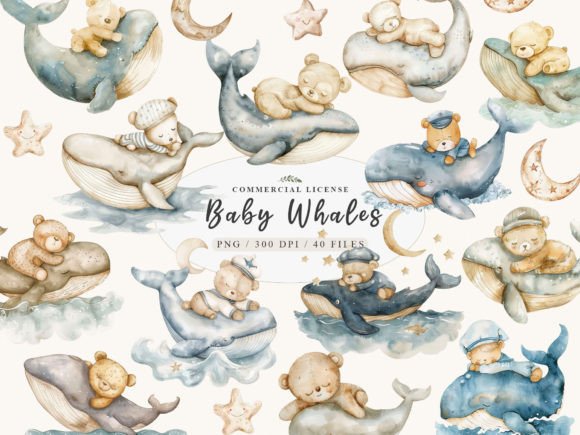
There is something quietly compelling about a blue whale rendered in watercolor. The combination of the ocean's largest mammal with the soft, unpredictable wash of pigment creates an image that feels both grounded and ethereal. Whale Watercolor Clipart, Blue Whale PNG assets offer designers and creators a versatile way to bring that feeling into their work, whether for branding, editorial projects, or personal crafts. These are not stiff, vector silhouettes or hyper-realistic photographs. They carry the organic texture of handmade art, with all the subtle variation that a brush and water can deliver.
What makes these assets stand out is the blend of realism and artistry. The blue whale form is recognizable, but the watercolor treatment introduces soft edges, color gradients, and sometimes even paper grain textures. The personality is calm, thoughtful, and slightly whimsical. It fits projects that want to communicate depth, conservation, exploration, or simply a love for marine life without resorting to clichés. For small business owners or bloggers, this type of clipart can differentiate your visual identity from the endless stream of flat icons and stock photos.
Visual Characteristics and Style Appeal
When you look at Whale Watercolor Clipart, Blue Whale PNG, the first thing you notice is the fluidity. Watercolor has a natural unpredictability, and that translates into artwork that feels alive. The blues can range from deep navy to cerulean, with lighter washes suggesting water reflection or sunlight filtering through the surface. The edges are rarely hard lines; they are soft, sometimes bleeding outward like the whale is emerging from a fog.
This visual style works particularly well because it occupies a middle ground between detailed realism and abstract art. It is detailed enough to read clearly as a blue whale, yet loose enough to feel artistic and atmospheric. The PNG format means the background is transparent, which is hugely practical for layering onto different backgrounds, from textured paper to dark ocean photography. Designers appreciate having that flexibility without needing to cut out a busy background.
The appeal for hobbyists and crafters is just as strong. If you are creating a nature-themed scrapbook page, a nursery wall print, or custom stationery, watercolor clipart adds a handmade quality that digital art often lacks. It signals care and creativity, which can elevate even a simple project. For marketers, that same quality builds trust. A brand that uses genuine-feeling artwork is often perceived as more authentic than one relying purely on generic templates.
Where Watercolor Whale Clipart Shines in Real Projects
Let me walk through some specific contexts where Whale Watercolor Clipart, Blue Whale PNG delivers strong results. The applications break down into a few key areas:
- Brand identity for nature-focused businesses – Ocean conservation nonprofits, eco-friendly toy companies, marine biology blogs, or sustainable seafood brands. The watercolor aesthetic softens the corporate edge and makes the mission feel personal and heartfelt.
- Editorial and publishing design – Children's books, nature magazines, or educational materials benefit from the gentle, engaging look. It draws readers in without being overly cartoonish or clinical. A watercolor whale as a chapter opener or sidebar illustration adds warmth to the page.
- Packaging design – Tea boxes, organic snack wrappers, bath products, or gift sets can use watercolor whale imagery to suggest natural ingredients and a calm brand experience. The soft color palette works especially well with kraft paper, muted greens, and earthy tones.
- Web design and social media graphics – Hero images, blog post headers, Instagram templates, and email newsletter graphics. The PNG format means you can overlay text, add a subtle drop shadow, or composite the whale into a larger scene without fighting with a background.
- Personal crafts and home decor – Printable wall art, greeting cards, wedding invites with an ocean theme, or fabric transfer designs. The watercolor style feels sophisticated enough for adults but approachable enough for children's spaces.
I have seen small business owners use these assets to create cohesive product lines. One Etsy seller used variations of the same blue whale watercolor across packaging, thank-you cards, and social media banners. The consistency built recognition quickly because the style was distinctive. Customers started associating that soft blue wash with the brand's promise of gentle, natural products.
Readability, Visual Hierarchy, and Brand Perception
A common concern with watercolor clipart is whether it will hold up visually in different contexts. The answer depends on how you use it. Whale Watercolor Clipart, Blue Whale PNG works best as a display element rather than as fine detail. You would not use it as a tiny bullet point icon because the subtle color variations and soft edges get lost at very small sizes. But for hero images, banners, product badges, or accent graphics at medium to large scale, it performs beautifully.
In terms of visual hierarchy, a watercolor whale naturally draws the eye because of its organic shape and soft contrast. It can serve as the primary visual anchor on a page, with text and other elements arranged around it. Because the clipart is not competing with harsh lines or intense saturation, it can coexist with both serif and sans serif typography without clashing. I have seen it paired with a clean modern sans serif for a minimalist look, and also with a delicate handwritten script for a more whimsical, storybook feel.
Brand perception benefits considerably. A premium font or a polished logo says "professional," but watercolor clipart says "thoughtful" and "human." For audiences aged 20 to 50, this is powerful. That demographic tends to value authenticity and emotional connection, especially from small businesses and content creators. Using Whale Watercolor Clipart, Blue Whale PNG in your visual identity signals that you care about the details and that your brand has a point of view. It is not just another logo; it is a piece of art.
Choosing the Right Assets and Evaluating Project Fit
Not all watercolor whale clipart is created equal. Here are practical considerations when selecting files for your project:
- Resolution and scaling – Look for PNGs at 300 DPI or higher if you plan to print. For web use, 72 DPI is fine, but check that the file is large enough to avoid pixelation when scaled up. Some sellers offer multiple size options in one download, which is ideal.
- Color versatility – Some clipart comes in a single blue tone, others offer multiple color variants. Consider whether you need a consistent palette or a range of hues to match different backgrounds.
- Transparency quality – The edges of watercolor art can be tricky. Good clipart will have carefully cleaned transparency with no harsh leftover pixels or floating paint splatters. Check the previews closely.
- Style consistency with your brand – Is the watercolor loose and abstract, or more controlled and realistic? Match the style to your brand personality. A loose splashy look works for creative or playful brands; a tighter, more controlled wash suits professional or educational contexts.
- Commercial licensing – Always verify the license. Many clipart sets allow commercial use, but some may have restrictions on resale, print-on-demand, or use in digital products. Read the terms carefully. A good commercial font or design asset license will clearly outline what you can and cannot do.
Testing the fit is straightforward. Drop the PNG into a mockup of your project before committing to a full set. Does it feel natural with your existing brand colors and typography? Can you place text over it without losing readability? If the answer is yes for both, you have a strong candidate. For bloggers and content creators, try using the clipart as a featured image or section divider in a single post and gauge audience response before rolling it out across your site.
Practical Recommendations and Design Observations
I encourage you to treat Whale Watercolor Clipart, Blue Whale PNG as a design asset rather than just a decoration. The best uses integrate the art into the structure of the page, not just as a floating image. For example, use the whale as a background watermark behind text, or as a framing device around a quote. In packaging, let the whale extend beyond a circular label for a more dynamic, flowing composition.
Pairing watercolor clipart with the right typography matters. A clean sans serif font keeps the layout modern and airy. A serif font adds a literary, thoughtful tone. A script font can introduce a friendly, approachable energy, but be careful with readability at smaller sizes. I recommend testing a few combinations: try a sans serif like Open Sans or Lato for clarity, or a serif like Playfair Display for elegance. The goal is to let the clipart shine without the text feeling like an afterthought.
One design observation worth noting: watercolor artwork often looks best when paired with subtle textures. A paper-like background or a slightly off-white base can enhance the painted feel. Avoid placing watercolor clipart on loud, busy backgrounds; the soft edges can get lost. Solid color blocks, gradients, or subtle patterns work much better.
For entrepreneurs and marketers, consistency across assets is the real win. If you commit to using Whale Watercolor Clipart, Blue Whale PNG as a recurring visual element, apply it the same way across all touchpoints. Maybe it always appears in the upper right corner of your website banners, or as the icon for a specific product category. That repetition builds visual memory. Over time, your audience will see that soft blue wash and instantly think of your brand, even without reading your name.
Ultimately, the value of this clipart goes beyond aesthetics. It gives you a way to communicate mood, values, and personality without writing a single sentence. That is the kind of asset every designer, blogger, and small business owner should have in their toolkit.