Birch Tree Watercolor Botanical Clipart for Modern Design
There is a quiet confidence in birch trees. Their pale bark, marked with dark horizontal eyes, stands out against almost any background. When that natural elegance is rendered in watercolor and offered as botanical clipart, you get a design asset that feels both timeless and immediately useful. Birch Tree Watercolor Botanical Clipart brings a handcrafted, organic quality to projects that need warmth without fussiness, and structure without stiffness.
Whether you are building a brand identity from scratch, designing product packaging, or creating social media content that actually stops the scroll, birch illustrations offer a versatility that stock photography and generic vectors rarely match. The watercolor finish adds a tactile dimension—a sense that something was painted, not just clicked into place.
Visual Character and Style Appeal
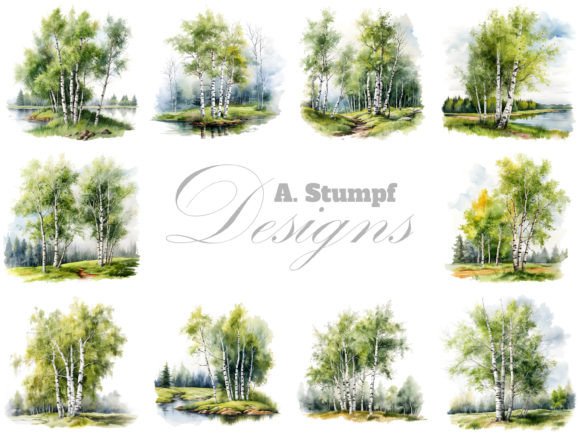
What makes Birch Tree Watercolor Botanical Clipart stand out is its balance between realism and artistry. The watercolor technique softens edges, introduces natural color variation, and gives each tree or leaf a subtle gradient that feels alive. Birch trees themselves have a distinctive look: white to pale gray bark, thin trunks, and delicate branching patterns. In watercolor form, these features become even more expressive.
The clipart typically includes individual trees, clustered groves, single leaves, branches, and sometimes seasonal variations with autumn yellows or spring greens. The palette stays grounded—soft greens, muted browns, creamy whites, and occasional touches of ochre or sage. This restrained color range makes the set easy to layer into existing designs without clashing.
For designers and content creators, this style works because it avoids being overly literal. It is botanical, but not textbook. It is decorative, but not precious. You can use it in a minimalist layout just as easily as in a layered, textured composition. The watercolor quality adds depth that flat vector art cannot replicate, while the clipart format keeps it practical and reusable.
Where to Use Birch Tree Watercolor Clipart in Real Projects
The practical applications for Birch Tree Watercolor Botanical Clipart are broader than you might expect. This is not just for wedding invitations and rustic signage, though it certainly excels there. Think bigger.
Brand Identity and Logo Design
Small businesses and solopreneurs often struggle to find visual assets that feel personal without looking amateur. Birch trees bring a natural, calm aesthetic that works well for wellness brands, organic food companies, nurseries, eco-friendly products, and lifestyle bloggers. A single birch trunk or leaf can become a memorable logo mark when paired with a clean sans serif font or a refined serif font. The watercolor texture gives the logo a handcrafted feel that signals authenticity and care.
Editorial Design and Publishing
Magazines, ebooks, and printed guides about nature, mindfulness, slow living, or sustainability benefit from imagery that reinforces the content without overwhelming it. Birch watercolor elements make excellent chapter openers, section dividers, or full-page accents. They work as background textures behind text, as long as you pay attention to contrast. Light watercolor washes behind a dark serif font or a clean sans serif font create a soft, inviting reading experience.
Packaging and Product Design
If you are selling candles, soaps, teas, skincare, or stationery, the packaging needs to communicate the product's essence at a glance. Birch trees evoke forest, purity, and simplicity. The watercolor style adds a premium feel without looking cold or industrial. Many small batch brands have built their entire visual identity around botanical watercolor elements. The key is consistency—using the same clipart set across labels, boxes, bags, and insert cards to create a cohesive brand experience.
Web Design and Social Media Graphics
Online, Birch Tree Watercolor Botanical Clipart can be used in hero sections, product page backgrounds, email headers, and social media templates. The organic shapes break up the rigid geometry of web layouts. For Instagram posts or Pinterest pins, a birch illustration paired with a bold display font or a friendly handwritten font creates a strong visual hierarchy that grabs attention. Just keep the text legible by placing it away from the busiest painted areas.
How the Clipart Influences Readability, Hierarchy, and Brand Perception
Visual assets do not just decorate—they direct the eye and shape how people feel about your content. Birch watercolor illustrations, used intentionally, can improve both readability and brand recognition.
Because birch trees have a strong vertical line, they naturally guide the eye up or down a page. This makes them useful in layouts where you want to lead the viewer from a headline to a call to action. Placing a birch tree element along the edge of a text block creates a subtle frame that keeps attention inside the content area.
The watercolor texture also affects brand perception. In an era of hyper-polished, AI-generated visuals, handcrafted aesthetics stand out. They signal that a human was involved. That matters for brands in wellness, education, publishing, and creative services. Birch Tree Watercolor Botanical Clipart communicates patience, artistry, and a connection to the natural world. It is a visual shorthand for "this is real."
Consistency across your use of the clipart reinforces brand identity. Using the same birch motif on your website, your packaging, and your social media creates a visual thread that makes your brand more recognizable. Over time, your audience associates that specific watercolor style with your business. That is the kind of recognition that paid ads cannot buy.
Practical Guidance for Choosing and Using This Clipart
Before you download Birch Tree Watercolor Botanical Clipart and start placing it everywhere, consider a few practical factors that will save you time and improve your results.
Evaluate Project Fit
Ask yourself whether the organic, natural feel of birch watercolor art matches your brand voice or project tone. It works beautifully for wellness, nature, lifestyle, and creative industries. It may feel out of place in corporate finance, heavy machinery, or high-tech B2B contexts. Not every project needs birch trees. Use them where they reinforce your message, not just because they look nice.
Test Font Pairing Early
Watercolor clipart has texture and irregular edges, so your font choices matter. A clean sans serif font like a geometric or humanist style creates a modern contrast with the organic art. A refined serif font reinforces a classic, editorial feel. A handwritten font or script font can feel cohesive but may become hard to read if both the art and the type are too ornate. Test your combinations on a mockup before committing.
Review the Included Styles and Formats
Good clipart sets offer multiple file types: PNG with transparent backgrounds, SVG for scaling, and sometimes JPEG or PDF. Check whether the set includes individual elements and grouped scenes. Some sets offer both full-color versions and black-and-white line art, which is useful for printables or coloring pages. Make sure the resolution is high enough for your intended use, especially for print projects where pixelation becomes obvious.
Consider Readability and Contrast
Watercolor images often have soft edges and light washes of color. If you place text directly over these areas, you risk losing legibility. Use a solid background behind your text, or position type on the lighter, less painted sections of the clipart. Dark text on a white or very light wash works best. If you must overlay text on a painted area, increase the font weight and add a subtle drop shadow or a semi-transparent overlay to improve contrast.
Understand Commercial Licensing
If you are a small business owner, marketer, or publisher, licensing matters. Some clipart sets are for personal use only. Others include commercial licenses that allow you to use the art in products you sell. Read the license terms carefully. Look for restrictions on redistribution, number of products, or whether you need to credit the artist. When in doubt, choose a set that explicitly offers commercial use rights, especially if you are building a brand identity or selling physical goods.
Real-World Examples and Recommendations
Consider a small skincare brand launching a new line of birch-infused serums. Using Birch Tree Watercolor Botanical Clipart across the product labels, the brand's website hero image, and their Instagram launch posts creates a unified look. The watercolor texture suggests natural ingredients and gentle formulation. Paired with a minimalist sans serif font and a soft color palette, the brand feels premium without being intimidating.
Or think about a lifestyle blogger who writes about seasonal living and forest walks. Birch watercolor illustrations used as blog post headers and Pinterest pin backgrounds give the site a cohesive, handcrafted identity. The irregular edges of the watercolor art make each post feel slightly different, while the consistent botanical theme keeps the overall aesthetic intact.
For a publisher creating a guided nature journal, birch clipart can be used on the cover, chapter dividers, and as decorative elements on prompt pages. The watercolor style invites the user to slow down, which is exactly the experience the product aims to deliver.
The best results come when you treat Birch Tree Watercolor Botanical Clipart as a design system, not a collection of one-off images. Choose a set with enough variety to cover multiple use cases, establish rules for where and how you place the art, and pair it with complementary design assets like textures, patterns, and fonts that share its natural sensibility.
Watercolor botanical clipart is not a trend. It is a durable visual language that connects people to nature and craftsmanship. Birch trees, with their iconic bark and graceful form, happen to be among the most versatile subjects in that language. Whether you are designing a logo, a product package, a website, or a printed publication, the right clipart set gives you a head start. Choose wisely, use consistently, and let the art do some of the storytelling for you.