Watercolor Cute Hummingbird Clipart in Modern Design
If you have spent any time browsing design assets for branding, packaging, or social media, you have likely noticed a shift. Hand-rendered, organic visuals are replacing stiff, vector-perfect illustrations at an accelerating pace. Among the most versatile of these assets is Watercolor Cute Hummingbird Clipart. This style blends the delicate, unpredictable nature of water media with the undeniable charm of one of nature's most beloved birds. It is neither a sterile icon nor a hyper-realistic painting. It sits in a sweet spot that appeals to small business owners, content creators, and designers who need warmth without sacrificing professionalism.
The visual personality here matters. A watercolor hummingbird carries soft edges, subtle color bleeds, and a lightness that feels approachable. It is not trying to impress with photorealism. Instead, it invites the viewer into a more gentle, handcrafted world. For brands and creators tired of aggressive, loud stock imagery, this clipart offers a quiet confidence.
What Makes This Art Style Stand Out Visually
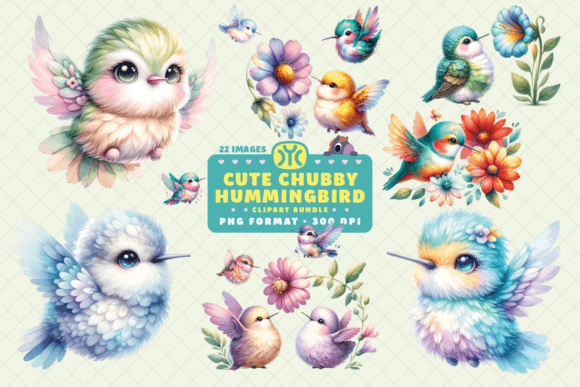
Watercolor, by its very nature, introduces variability. No two strokes dry the same way. When applied to a hummingbird subject, the result is a fusion of movement and softness. The bird's iridescent feathers, normally sharp and metallic in photographs, become blended washes of teal, emerald, violet, and rose. The "cute" aspect comes from proportion. Eyes are slightly larger, wings are rounded, and the overall silhouette leans playful rather than scientific.
This clipart typically arrives as a set of individual PNG or transparent background files. You get multiple poses, angles, and often accompanying floral or botanical accents. The style works because it embraces imperfection. Paint splatters, uneven edges, and subtle granulation in the pigment give each file a tactile quality that digital-first design often lacks. For a designer working on a children's book cover, a wedding invitation suite, or a boutique skincare label, that tactile quality is gold.
The color palette is another strength. Most sets lean into pastel or jewel-toned watercolors. Think soft peach bellies, deep sapphire wings, and pale cream backgrounds. These colors photograph well on screens and reproduce beautifully in print, provided you work with a good printer and quality paper stock.
Where This Clipart Works Best Across Projects
Understanding where to deploy Watercolor Cute Hummingbird Clipart separates a good design from a mismatched one. This is not a asset for heavy industrial branding or corporate annual reports. Its strengths lie in contexts where emotion, approachability, and a handmade ethos add value.
Branding and Logo Design
Small businesses in wellness, eco-friendly products, floral design, and children's services benefit tremendously. A hummingbird logo rendered in watercolor suggests agility, sweetness, and a connection to nature. When paired with a clean serif font or a refined handwritten font, the combination reads as both premium and personal. Avoid pairing it with a heavy sans serif font that feels too technical. You want the typeface to support the softness, not compete with it.
Packaging Design
Tea boxes, honey jars, organic skincare, and artisanal candle labels are natural homes for this clipart. The watercolor texture implies natural ingredients and small-batch care. Because hummingbirds are associated with nectar and sweetness, the connection to food and beauty products feels intuitive, not forced.
Editorial Design and Blog Graphics
Lifestyle bloggers, nature writers, and mindfulness content creators use this clipart to break up text and add visual breathing room. A full-page watercolor hummingbird in an editorial layout softens the reading experience. It works beautifully as a chapter opener, a sidebar accent, or a decorative border element. The transparency of the watercolor layers means it integrates without overwhelming body text.
Social Media Graphics
Instagram posts, Pinterest pins, and Facebook cover images benefit from the high visual contrast. A hummingbird with bright wing gradients pops against a clean white or soft pastel background. For quotes, affirmations, or product announcements, the clipart frames the message without stealing the spotlight.
Personal and Commercial Projects
Wedding stationery, baby shower invitations, nursery decor prints, and handmade cards are all excellent fits. The commercial licensing on most quality sets allows you to use the art in products you sell, which is critical for entrepreneurs and crafters. Always verify the license, but a well-sourced commercial font or clipart set will give you full usage rights for merchandise.
Influencing Brand Perception and Audience Engagement
Design assets do more than decorate. They communicate values. When you choose Watercolor Cute Hummingbird Clipart, you are signaling that your brand values beauty, gentleness, and craftsmanship. In a digital landscape flooded with generic templates, water-based art stands out because it looks human-made. That perception of human effort builds trust.
Readability and visual hierarchy also benefit. Because watercolor textures are inherently low-contrast compared to hard vector shapes, they can be placed behind text without creating visual noise. This makes them excellent background elements for quotes, headers, or product descriptions. The viewer's eye naturally rests on the softer edges, then moves to the sharper type. You get an effortless visual hierarchy without aggressive styling.
Brand consistency improves when you use a cohesive set. A single hummingbird clipart set typically includes enough variations that you can use one style across your website, packaging, and social channels. That repetition builds recognition. Customers begin associating that specific watercolor style with your brand, which is the goal of brand identity work.
Practical Guidance for Choosing and Using the Clipart
Selecting the right set requires more than liking the colors. Here are specific criteria to evaluate before you purchase or download.
Evaluate Project Fit First
Ask yourself what feeling the design needs to convey. If your project calls for energetic, modern, and clean, this clipart may be too soft. But if you need warmth, nostalgia, or natural elegance, it is a strong candidate. Test it against your existing brand identity assets. Does the watercolor texture clash with your current photography style? Does the color palette align with your modern typography choices? Alignment matters more than individual beauty.
Font Pairing Considerations
Pairing the clipart with the right typeface determines whether the final design feels cohesive or disjointed. A script font with flowing letterforms complements the organic nature of watercolor. A handwritten font reinforces the handmade aesthetic. For a more polished look, a light serif font in a soft weight works well. Avoid heavy sans serif fonts with rigid geometric shapes unless you are deliberately creating tension for a modern edge. Test your font pairing on a mockup before committing.
Readability and Scale
Watercolor clipart loses definition when scaled too small. If you are using the hummingbird as a tiny icon, the subtle paint textures may turn into a blur. Reserve the clipart for medium to large placements where the brush strokes and color variations remain visible. In small sizes, consider using a simplified version or a different asset entirely.
Review Included Styles and Formats
Before you buy, check what is included. High-resolution PNG files with transparent backgrounds are essential for web and print. Vector files (SVG or EPS) give you infinite scalability. Some sets include black-and-white line art versions for coloring books or single-color printing. A good set should offer multiple angles, such as hovering, flying sideways, and perched. Accompanying floral elements like branches, leaves, and blossoms add flexibility for building compositions.
Commercial Licensing
For entrepreneurs and designers creating work for clients, licensing is non-negotiable. A commercial font license for typography is standard, but clipart licensing varies. Some sets allow unlimited commercial use, while others cap the number of products or require attribution. Read the terms. If you plan to sell products featuring the clipart, ensure the license covers merchandise, digital products, and print-on-demand services. Investing in a properly licensed set saves legal headaches later.
Real-World Examples and Design Observations
I have seen this clipart used exceptionally well in a tea company's packaging. The brand used a single hummingbird centered on a kraft paper box, paired with a delicate handwritten font for the product name. The watercolor edges softened against the brown paper, creating a rustic, premium look that sold at a higher price point than competitors using standard stock photos.
Another effective application was a wedding invitation suite. The designer used the hummingbird as a subtle watermark behind the text block. Because the watercolor was pale and translucent, the serif font remained fully readable. The overall impression was romantic and airy, with the bird symbolizing joy and new beginnings.
On social media, a wellness coach used the clipart as a recurring visual motif. Every quote graphic featured a different hummingbird pose in the corner. Followers began recognizing the style instantly. The watercolor texture became a brand signature, more memorable than any logo could be on its own. This is the power of consistent design assets used intelligently.
One caution I offer: avoid overloading a composition with too many clipart elements. Because watercolor textures are visually rich, two or three hummingbirds with accompanying florals can quickly feel crowded. Give each element space to breathe. Negative space is your friend here.
For print projects, test your files on the intended paper stock. Watercolor clipart that looks vibrant on screen may print darker on matte paper or lose detail on glossy finishes. Request a physical proof if possible, or print a small test before committing to a large run.
Final Thoughts on Working with This Style
Watercolor Cute Hummingbird Clipart is more than a decorative asset. It is a strategic choice for brands and creators who want to communicate warmth, artistry, and a connection to nature. When paired with thoughtful modern typography and used with restraint, it elevates projects from ordinary to memorable. Whether you are designing a logo, building a packaging line, or creating content for a blog, this style offers a versatile, emotionally resonant tool that audiences respond to. Choose your set carefully, pair it with complementary font pairing choices, and always prioritize readability and brand alignment. Done right, a small hummingbird can carry a whole visual story.